
← Back to Automation Failure Modes
Undefined Ownership: The Silent Risk of Automated Shadows
In the rapid adoption of low-code and no-code tools, companies have prioritized "The Build." The celebration happens the moment a workflow is successfully published. But in a professional enterprise environment, the build is only 20% of the lifecycle. The remaining 80% is Governance and Ownership.
Without a designated owner, an automated system is a "Shadow Asset." It operates with the credentials of a specific human, moves data according to a specific point-in-time logic, and consumes resources without oversight. This insight diagnoses the catastrophic risks of the Accountability Vacuum and defines the structural protocols required for durable asset ownership, aligning with Gartner's definition of IT governance. This lack of ownership is a significant factor in why business automations break.
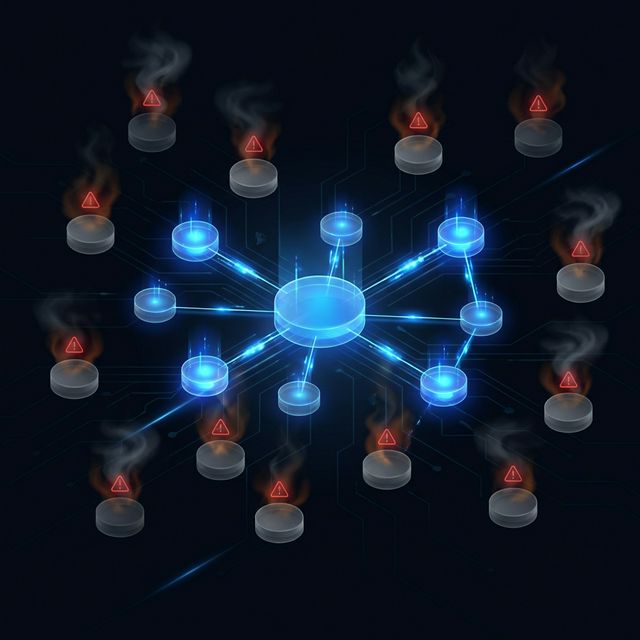
Use this diagnostic to identify "Zombie Automations" and "Shadow Assets" currently active in your infrastructure.
What People Think This Solves
The standard belief in mid-market companies is that "The Creator" is the same as "The Owner." Because an automation is "low-code" (e.g., a Zapier workflow or a HubSpot sequence), teams assume it doesn't require the same governance as traditional software. Common expectations include:
- Creator Responsibility: "The person who built the Zap will notice if it fails."
- Tool-Level Management: "Zapier will tell us if there's an error, so we don't need a human owner."
- Elastic Maintenance: "We'll just figure out who owns it if it ever breaks."
This is the Shadow Automation Fallacy. It ignores the fact that people leave companies, roles change, and API tokens expire. Ownership is not a biological trait of the creator; it is a structural designation by the organization.
The Four Risks of the Accountability Vacuum
When an automation lacks a defined owner, it enters one of four "Failure States" that create compounding technical debt:
1. The Zombie Process
A "Zombie" is an automation that continues to process data according to business rules that are no longer valid. The original creator has left the company, but their workflow is still firing. It might be sending outdated discount codes to customers, routing leads to a salesperson who no longer works there, or purchasing ad credits for a decommissioned campaign. Because there is no owner to "sunset" the process, it continues to burn resources and corrupt data silently.
2. Security & Credential Rot
Most "Shadow Automations" run on Personal API Tokens. When the creator changes their password, enables MFA, or has their account deactivated after leaving the company, the automation fails instantly. Or, worse, the automation continues to run using a high-authority token that is no longer monitored, creating a massive security hole. If that token is compromised, the attacker has a "service account" into your CRM that no one even knows exists.
3. The Compliance Blind Spot
As regulations like GDPR and CCPA become more stringent, the "Accountability" of automated data processing is a legal requirement. If an automation incorrectly forms a contract or moves PII (Personally Identifiable Information) in a way that violates a privacy agreement, the organization must point to a Data Steward. If the answer is "we don't know who owns that Zap," the legal liability increases exponentially.
4. Maintenance & Discovery Debt
When an unowned automation breaks, it triggers a "Fire Drill." Because there is no documentation and no steward, a senior engineer must spend hours (or days) reverse-engineering the logic just to figure out what it was supposed to do. This "Mystery Tax" is a massive drain on technical productivity.
Case Study: The $50,000 Ghost in the Machine
We recently audited a client who had a "Zombie Automation" connected to an old marketing experiment. The workflow was designed to "auto-replenish" ad credits whenever a lead converted. The campaign was shut down, but the automation remained active. For six months, it continued to trigger "ghost" conversions due to a tracking pixel error, spending $50,000 in unmonitored ad credits before someone noticed the billing anomaly. Total cost of missing ownership: $50,000.
System Design Principles: The Ownership Protocol
To secure your automation fleet, you must move from "Personal Workflows" to "Enterprise Assets" using these four protocols:
1. Service Accounts by Design
Mission-critical automations must never run on personal tokens. They must run on dedicated "System Users" (e.g., automation@yourcompany.com). This ensures that the workflow remains active regardless of individual employee turnover and keeps permissions scoped strictly to the task.
2. The Center of Excellence (COE) model
Ownership should follow a "Hub and Spoke" model. The "Hub" (the COE) provides the security standards, the service accounts, and the monitoring tools—a pattern detailed in IBM's guide to the Center of Excellence. The "Spoke" (the Business Owner in Marketing or Sales) provides the business logic and is accountable for the results of the automation. This structural balance is a key part of modern system design patterns. If the automation fails, the COE fixes the technical break, but the Business Owner decides if the process is still valid.
3. Mandatory Metadata (The Tagging Rule)
Every automation in your platform must be tagged with:
- Business Owner: The person who benefits from the data.
- Technical Steward: The person who knows how it works.
- Last Audit Date: When the logic was last verified.
4. Scheduled Depreciation Cycles
Complexity is the enemy of reliability. Every six months, every automation should be reviewed. If the owner cannot justify the continued existence of the workflow, it should be deactivated. This "Sunsetting" process prevents the accumulation of Zombie Assets.
Why This Failure Is Expensive
- Security Risk: Unmonitored personal tokens are a primary attack vector for data breaches.
- Software Waste: Companies often spend 30% of their task budgets on automations that are no longer performing a useful function.
- Operational Friction: The "Mystery Tax" spent reverse-engineering undocumented workflows stalls your ability to innovate.
Where This Pattern Fits (and Where It Doesn’t)
Formal ownership is mandatory when:
- The automation crosses departments (e.g., Marketing to Sales).
- The automation uses PII or financial data.
- Failure would cause a customer-facing outage.
Personal accountability is acceptable when:
- The workflow only affects the individual creator (e.g., "Schedule my focus time").
- The data is purely ephemeral and low-stakes.
How This Appears in Client Systems
The most common symptom of undefined ownership is "The Fear of Deletion." We see platforms with hundreds of Zaps, half of which are toggled "Off," and the client is terrified to delete them because "we don't know what they were for." This is a signal that you have lost control of your infrastructure.
Maturity is the ability to delete a workflow without fear, because you understand the ownership and the intent of every asset in your library.
Accountability is the anchor of automation. Without it, you are not building a system; you are just participating in a series of events that you don't control. Master this within our System Design Patterns framework and resolve automation failure modes permanently.
Operators ready to take control of their automation fleet often start with → System Design Patterns
An automation without an owner is not an efficiency; it is an unmonitored liability.
Operators diagnosing this pattern often find the structural root cause in → Explore System Design Patterns